
TrendCrypt News
SEC Rewrite Could Bring Stock Ownership Onchain
The SEC is modernizing transfer-agent rules for blockchain securities, tackling the legal ownership records that tokenized-stock trading cannot solve alone.
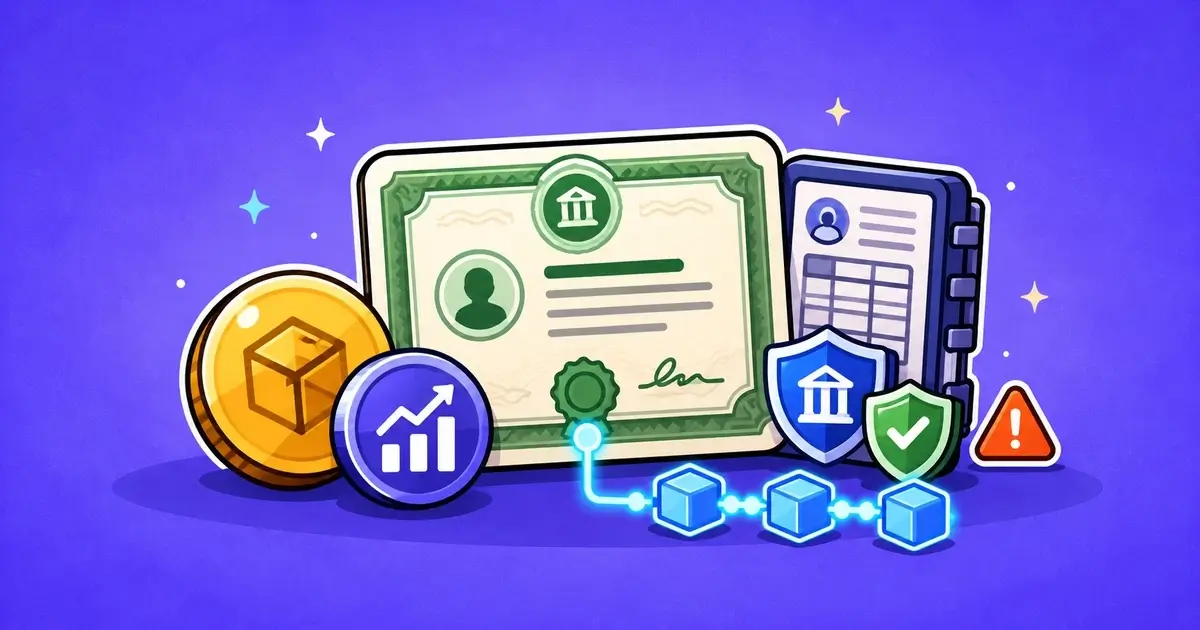
Putting a stock on a blockchain is relatively easy.
Making the blockchain record legally mean that someone owns the stock is much harder.
That distinction sits behind a major new proposal from the U.S. Securities and Exchange Commission.
On September 1, the SEC proposed the most significant modernization of federal transfer-agent rules in decades.
The existing framework was largely built in the late 1970s and early 1980s.
Today’s securities infrastructure looks very different.
Records are electronic.
Market systems are highly automated.
Companies are experimenting with blockchain-based securities.
Smart contracts can move assets automatically.
Tokenized shares can trade through infrastructure that did not exist when most transfer-agent rules were written.
The SEC now wants the regulatory framework to catch up.
That might sound like an obscure administrative update.
It could become one of the more important pieces of infrastructure behind tokenized stocks.
Because the hardest part of moving equities onchain is not creating a token called:
AAPL
or
TSLA.
It is answering:
Does the person controlling this token legally own the underlying security?
Transfer agents sit directly in that gap.
Key Takeaways
- The SEC proposed a major modernization of registered transfer-agent rules on September 1, 2026.
- Transfer agents help maintain accurate securities ownership records and support the transfer of shares from sellers to buyers.
- The current federal framework has not been substantively modernized since the first major rules were adopted in the late 1970s and early 1980s.
- The SEC explicitly says modern transfer agents increasingly interact with blockchain technology, tokenized securities, distributed ledgers, smart contracts and automated systems.
- Commissioner Hester Peirce has specifically asked whether transfer-agent rules should change to facilitate onchain trading of tokenized securities.
- She also raised the possibility that future rules could recognize identifiers such as digital wallet addresses rather than relying entirely on traditional names and physical addresses.
- A blockchain token that tracks a stock price is not automatically the same as legally owning that stock.
- Issuer-sponsored tokenized securities can potentially integrate blockchain directly into the official ownership structure.
- Third-party stock tokens and synthetic products may instead represent contractual or economic exposure while ownership of the underlying security remains elsewhere.
- Tokenized securities still need mechanisms for lost keys, ownership corrections, corporate actions, transfer restrictions and cybersecurity failures.
- Blockchain can modernize the securities ledger, but it cannot eliminate the need to determine which ownership record is legally authoritative.
- The SEC proposal is therefore part of a broader shift from debating whether securities can move onchain toward determining how legally recognized onchain ownership should actually work.
What Is a Transfer Agent?
Transfer agents are one of those pieces of financial infrastructure ordinary investors rarely notice.
When the system works, they remain almost invisible.
Their role becomes much easier to understand through a basic question:
Who keeps track of who owns a company’s shares?
A public company may have millions of shares moving through:
- brokers,
- institutional accounts,
- direct registration,
- employee plans,
- corporate actions.
Ownership records need to remain accurate.
Transfer agents help maintain those records and perform functions connected to issuing, transferring and cancelling securities.
They can also help manage:
- shareholder records,
- lost securityholders,
- restrictive legends,
- dividend distributions,
- stock splits,
- mergers,
- other corporate actions.
That infrastructure exists whether the security is represented by paper, a conventional electronic database or potentially a blockchain token.
The technology can change.
The legal need to know who owns the security does not.
What Transfer Agents Actually Do
| Function | Traditional Role | Why It Matters for Tokenized Securities |
|---|---|---|
| Ownership Records | Maintains accurate records of registered securityholders | Blockchain does not automatically determine which ledger is legally authoritative |
| Share Transfers | Processes changes in registered ownership | Onchain movement needs to produce legally recognized ownership changes |
| Issuance | Records new securities issued by a company | Token minting must correspond to valid securities issuance |
| Cancellation | Removes or cancels securities when appropriate | Burning a token needs to remain synchronized with legal records |
| Restrictions | Tracks transfer restrictions and restrictive legends | Smart contracts may automate restrictions but still need correct legal logic |
| Lost Holder Processes | Helps locate missing securityholders and manage abandoned property obligations | Wallet-based ownership creates new recovery and identity questions |
| Corporate Actions | Supports dividends, splits and other issuer events | Onchain shares still need accurate treatment during real corporate events |
Why This Suddenly Matters for Crypto
Crypto solved asset transfer in a radically different way.
On a blockchain, the ledger itself records which address controls a token.
If Alice sends a token to Bob:
Alice balance decreases.
Bob balance increases.
The ledger changes.
No separate institution necessarily needs to reconcile the transfer later.
That architecture inspired the idea of tokenized securities.
Instead of a broker’s internal database saying an investor owns 100 shares, perhaps those shares can exist directly as blockchain assets.
The potential benefits are obvious.
Transfers can become:
- programmable,
- easier to synchronize,
- potentially faster,
- easier to automate.
But securities introduce something ordinary crypto tokens do not automatically have.
Legal ownership rights against an issuer.
The blockchain can say:
Wallet 0x123 owns token #456.
Securities law still needs to know:
Does token #456 represent one legally recognized share of Company X?
That bridge between technical possession and legal ownership is where transfer-agent infrastructure becomes critical.
A Tokenized Stock Can Mean Several Different Things
One of the biggest problems in the tokenized-stock conversation is terminology.
Several products can all be described as:
tokenized stocks
while giving investors very different rights.
Not Every Tokenized Stock Represents the Same Thing
| Structure | How It Works | What the Investor May Actually Own |
|---|---|---|
| Issuer-Sponsored Tokenized Share | The company or its authorized infrastructure represents the actual security onchain | Can potentially represent direct ownership of the underlying security |
| Broker Token Representation | A broker creates a digital representation of securities held elsewhere | Holder rights depend on the broker and legal structure |
| Synthetic Stock Token | Token tracks a stock price without necessarily owning the underlying share | Usually economic exposure rather than direct shareholder ownership |
| Tokenized Fund Interest | A fund share or other investment interest is represented onchain | Rights come from the fund structure, not from directly owning every underlying asset |
An Issuer-Sponsored Token Is the Cleanest Model
Imagine a public company decides to issue shares using blockchain infrastructure.
The issuer participates directly.
Its transfer agent recognizes the blockchain record.
The legal documents recognize the tokenized shares.
When the token moves between eligible wallets, the registered ownership record updates accordingly.
In that model, blockchain is not merely creating a financial product that tracks the company’s stock.
It becomes part of the actual securities infrastructure.
That is the most important version of tokenization.
Because the token can potentially be the security rather than merely representing exposure to one held elsewhere.
Third-Party Tokenization Is Different
Now imagine an unrelated financial company buys Apple shares.
It holds them through conventional custody.
Then it issues blockchain tokens that represent some claim connected to those shares.
The token holder may receive:
- price exposure,
- distributions,
- redemption rights.
But Apple’s official shareholder records may not show that token holder as the registered owner.
The intermediary may remain the actual holder of the underlying securities.
That structure can still be useful.
It is not the same thing as Apple moving its shareholder registry onto a blockchain.
This distinction is essential when discussing tokenized equities.
Synthetic Stock Tokens Are Further Removed Again
A token does not even need to hold the underlying share.
It can simply track the price.
For example:
1 synthetic NVDA token = economic exposure designed to follow Nvidia shares.
The token can increase when Nvidia rises.
It can decrease when Nvidia falls.
The user may never own Nvidia stock.
This resembles derivatives more than direct share ownership.
Calling both instruments “tokenized Nvidia” creates obvious confusion.
TrendCrypt’s broader RWA coverage has repeatedly encountered this problem: putting a real-world price onchain is not automatically the same as putting the underlying legal asset onchain.
Traditional Shares vs Different Tokenized Structures
| Structure | Official Ownership Record | Transfer Infrastructure | Legal Maturity |
|---|---|---|---|
| Traditional Registered Share | Transfer agent / issuer records | Conventional brokerage and settlement infrastructure | Well-established |
| Issuer-Sponsored Tokenized Share | Potentially blockchain-integrated official record | Blockchain plus regulated securities infrastructure | Emerging |
| Third-Party Tokenized Security | Underlying security held through another structure | Token represents rights created by third party | Depends heavily on legal design |
| Synthetic Equity Token | No necessary change to official company ownership records | Token tracks price or contractual exposure | Not equivalent to owning the share |
The SEC Already Recognizes These Differences
Earlier in 2026, SEC staff published a framework distinguishing different tokenized-security structures.
One major category involves securities tokenized by or on behalf of the issuer.
Another involves securities tokenized by third parties.
That distinction is extremely important.
An issuer-controlled tokenization project can integrate blockchain into the actual security.
A third party can instead create a separate crypto asset linked to securities that remain inside conventional custody.
Both can use blockchain.
Their legal relationships are different.
That is why asking:
Is this stock token on Ethereum?
is less important than asking:
Who legally issued it, and where is the official ownership record?
The Official Ledger Is the Real Issue
Blockchains make shared ledgers easy.
Securities need something more specific.
An authoritative ledger.
Suppose a tokenized share appears in Wallet A.
The transfer agent’s internal system says Wallet B owns it.
Which one wins?
If there is no clear answer, the market does not have meaningful settlement.
This is one reason tokenization cannot simply replace existing databases without updating the legal infrastructure surrounding them.
The blockchain record needs to be:
- recognized,
- reconciled,
- controlled appropriately,
- integrated with issuer records.
Otherwise, tokenization creates one more database rather than eliminating databases.
Blockchain Does Not Automatically Remove Reconciliation
This is one of the most overused promises in tokenization.
A shared blockchain can absolutely reduce reconciliation.
But only when important market participants agree that the shared record is authoritative.
Imagine five organizations maintain separate systems:
- blockchain,
- transfer agent,
- custodian,
- broker,
- issuer.
If they still compare all five records after every transaction, the blockchain has not eliminated reconciliation.
It added another ledger.
The real efficiency appears when infrastructure is redesigned so fewer parallel records need to be independently maintained.
That requires regulatory and operational change.
Not only blockchain software.
The SEC Proposal Is About That Plumbing
The September proposal is significant because it acknowledges how much transfer-agent operations have changed.
Modern transfer agents can look more like technology companies than traditional paper-processing businesses.
They rely on:
- electronic records,
- connected systems,
- automated workflows,
- software providers.
Some increasingly work with:
- distributed ledgers,
- tokenized securities,
- smart contracts.
Yet many federal requirements come from an era before:
- consumer internet,
- cloud computing,
- modern cybersecurity,
- blockchains.
The SEC is effectively asking:
What should a transfer agent look like when securities ownership itself becomes software?
Cybersecurity Becomes Securities Ownership Security
This is one of the most important parts of the proposal.
If a transfer agent’s database is compromised today, the consequences can already be serious.
In tokenized markets, the technical infrastructure may directly interact with transferable securities.
A vulnerability could potentially affect:
- issuance,
- transfer,
- shareholder records,
- restrictions,
- ownership synchronization.
That makes cybersecurity inseparable from securities administration.
The proposed framework therefore addresses areas such as:
- information security,
- operational risk,
- disaster recovery,
- technology controls.
That modernization is overdue even without blockchain.
Tokenization makes it more urgent.
Smart Contracts Can Make Mistakes Too
Crypto discussions often treat automation as though it removes human error.
It changes the error.
A manually processed transfer can fail because a person enters the wrong information.
A smart contract can fail because a developer encoded the wrong rule.
The advantage of code is consistency.
The danger is consistency.
If the rule is wrong, the software can execute the mistake perfectly every time.
For tokenized securities, this can affect:
- who is allowed to receive shares,
- when transfers can occur,
- how restrictions expire,
- how corporate actions are applied.
That means smart contracts need legal and operational review in addition to code audits.
Tokenized Securities Still Have Transfer Restrictions
Stocks are not always freely transferable.
Some securities can be:
- restricted,
- subject to holding periods,
- limited to certain investor types.
Transfer agents already deal with restrictive legends and other controls.
Blockchain can potentially automate those rules.
A smart contract might prevent a wallet from receiving a security unless that wallet is associated with an eligible investor.
That can improve compliance.
But the system now depends on multiple things being correct:
- identity information,
- wallet mapping,
- smart-contract logic,
- legal interpretation.
Automation reduces some operational work.
It does not remove legal complexity.
Could Wallet Addresses Become Shareholder Identifiers?
Commissioner Hester Peirce raised one particularly interesting question around the proposal.
Traditional transfer-agent rules often expect conventional shareholder information such as:
- names,
- physical addresses.
Onchain systems naturally revolve around digital identifiers.
Most obviously:
wallet addresses.
That raises a future possibility.
Could a securities ownership system record:
Investor X → Wallet Y
as part of the official shareholder infrastructure?
Technically, yes.
Legally, the details become difficult.
A Wallet Address Is Not an Identity
An Ethereum address does not tell anyone:
- legal name,
- residence,
- tax status,
- sanctions status,
- accredited-investor status,
- whether the owner is alive.
It is simply a cryptographic identifier.
A regulated tokenized-security system therefore needs some relationship between:
wallet
and
legal person or entity.
That can be handled through:
- identity providers,
- brokers,
- transfer agents,
- credential systems.
The challenge is preserving useful blockchain characteristics without reconstructing an ordinary brokerage account under another name.
Privacy Becomes Part of the Design
Public blockchains create another complication.
Traditional shareholder records are not normally broadcast transaction-by-transaction to the entire internet.
A public blockchain can expose:
- addresses,
- balances,
- transfer patterns.
If legal identities are directly attached to those addresses, financial privacy can deteriorate rapidly.
Tokenized securities therefore need to balance:
- transparency,
- regulator access,
- investor privacy.
Possible approaches include:
- permissioned networks,
- pseudonymous public addresses linked privately to identity,
- privacy-preserving credentials,
- hybrid infrastructure.
There is no universal solution yet.
Lost Keys Create a Securities-Law Problem
Crypto users already understand the rule:
Lose the private key, lose the crypto.
That becomes much harder to accept when the token represents a legally registered security.
Suppose someone owns 10,000 directly registered tokenized shares.
Their hardware wallet is destroyed.
Their seed backup is also lost.
Does the person permanently stop owning the shares?
Probably not necessarily.
Traditional securities systems already have procedures for replacing lost certificates and resolving ownership disputes.
Tokenized securities will need some equivalent process.
That means the system may need the ability to:
- invalidate old token representations,
- verify legitimate ownership,
- reissue assets to another wallet.
From a pure crypto perspective, that sounds centralized.
From a securities-law perspective, it may be essential.
“Not Your Keys, Not Your Stocks” Does Not Work Cleanly
Crypto culture often equates private-key control with ownership.
Securities introduce legally enforceable rights beyond cryptographic control.
Suppose an attacker steals someone’s wallet and transfers tokenized shares.
Technically:
the attacker signed the transaction.
Legally:
the transfer may have resulted from theft.
Those two facts can conflict.
A securities system cannot always say:
valid signature means final ownership forever.
Courts, issuers and transfer agents may need mechanisms for correction.
That makes tokenized securities fundamentally different from many permissionless crypto assets.
What Blockchain Improves—and What It Does Not Solve
| Area | Potential Tokenization Benefit | Remaining Problem |
|---|---|---|
| Trading | Potentially near-continuous transfer and automated execution | Exchange and market-structure rules still apply |
| Settlement | Could reduce reconciliation and settlement delays | Cash and securities still need legally final transfer |
| Recordkeeping | Shared ledgers can synchronize ownership data | The system still needs a legally authoritative record |
| Corporate Actions | Smart contracts can automate distributions | Legal entitlements, taxes and corrections remain necessary |
| Investor Identity | Wallet addresses can identify transaction endpoints | A wallet address is not automatically a verified legal identity |
| Recovery | Self-custody can reduce intermediary dependence | Lost keys create difficult questions for registered ownership |
Corporate Actions Make the Problem More Real
Stocks are not static tokens.
Companies change.
They can:
- pay dividends,
- split shares,
- merge,
- spin off businesses,
- issue new securities,
- conduct tender offers.
Shareholder records determine who receives what.
Suppose Company X announces a 2-for-1 split.
Every legitimate shareholder needs twice as many shares.
In a tokenized system, the blockchain state needs to reflect that accurately.
That could potentially happen automatically.
But automation needs to stay synchronized with the company’s legal obligations.
If the smart contract fails, the corporate action still happened.
The legal system cannot simply say:
the code didn’t execute, therefore the stock split doesn’t exist.
This Is Why Transfer Agents May Become More Important, Not Less
Blockchain advocates sometimes assume tokenization removes intermediaries.
Some may disappear.
Others may change roles.
Transfer agents could actually become more important because they sit at the intersection of:
- issuer obligations,
- investor identity,
- digital ownership,
- blockchain records.
Instead of manually updating databases, a future transfer agent could operate infrastructure that ensures onchain records remain legally correct.
The role moves from:
record processor
toward:
ownership infrastructure operator.
That is a significant transformation.
Or Their Role Could Shrink Dramatically
The opposite is also possible.
If blockchain infrastructure handles:
- issuance,
- transfer,
- ownership records,
- corporate actions
automatically, some traditional transfer-agent work may disappear.
The remaining role could focus on:
- legal validation,
- exceptions,
- recovery,
- compliance.
This is exactly why the SEC is asking what transfer agents should become as securities move onchain.
The technology does not automatically answer that institutional question.
Trading Onchain Is Easier Than Ownership Onchain
Crypto markets have already demonstrated that stock-like exposure can trade around the clock.
That does not prove the underlying stock market has moved onchain.
Trading is one layer.
Ownership is another.
Settlement is another.
Corporate actions are another.
Regulatory reporting is another.
A token can trade 24/7 while the underlying security still settles through conventional infrastructure.
That can improve access.
It does not fully modernize the securities system.
NYSE and Other Exchanges Are Already Testing Tokenized Trading
The transfer-agent proposal arrives while U.S. exchanges themselves are experimenting with tokenized securities.
Earlier this year, rule changes began creating pathways for certain securities to trade in tokenized form.
That matters because modernization is happening from multiple directions.
Exchanges are exploring:
How should tokenized securities trade?
Transfer-agent reform asks:
How should ownership records operate?
Clearing and settlement infrastructure asks:
How should the transaction become final?
The eventual market needs all three to work together.
Tokenized Trading Without Tokenized Settlement Only Goes So Far
Imagine a security trades instantly onchain.
Buyer and seller agree immediately.
But the official settlement system still needs one or two days to update ownership.
The front end looks modern.
The backend remains conventional.
That can still improve user experience.
It does not capture the full potential of tokenization.
The bigger efficiency gain comes when:
trade + settlement + ownership record
move together.
That is harder because more legally significant systems need to change.
Stablecoins May Become Part of the Settlement Layer
Tokenized securities also need money.
If a stock moves onchain but cash remains elsewhere, the parties still need to bridge two systems.
Stablecoins are one possible answer.
A tokenized stock and regulated stablecoin could potentially settle atomically:
stock moves if and only if money moves.
That can reduce settlement risk.
Tokenized bank deposits or tokenized central-bank money could provide other options.
TrendCrypt recently examined why banks may need both tokenized deposits and stablecoins.
Tokenized securities are where that debate becomes practical.
The asset and the money need compatible settlement infrastructure.
Atomic Settlement Is One of the Biggest Opportunities
Traditional securities settlement separates several stages.
Trade now.
Settle later.
That creates temporary counterparty exposure.
Tokenized systems can potentially use delivery-versus-payment logic where both sides happen together.
If the buyer pays:
shares transfer.
If the payment fails:
shares do not transfer.
That can simplify risk.
It may also reduce the need for some capital and reconciliation processes.
But the benefit exists only if both the cash and security transfer are legally recognized.
A smart contract cannot create finality merely by calling something final.
Where Tokenized Securities Could Improve Market Infrastructure
| Potential Benefit | How It Could Work | Why It Matters |
|---|---|---|
| Faster Settlement | Ownership and payment can potentially update in a tightly coordinated transaction | Reduces reconciliation and counterparty exposure |
| 24/7 Infrastructure | Technical transfer systems can operate outside traditional market hours | Could make securities infrastructure more flexible |
| Programmable Compliance | Smart contracts can enforce some eligibility and transfer rules | Reduces certain manual processing steps |
| Fractionalization | Digital infrastructure can support smaller units efficiently | Can broaden distribution where legally permitted |
| Transparent Records | Authorized participants can share synchronized ownership information | May reduce duplicated records across intermediaries |
| Automated Corporate Actions | Dividends or other events can interact directly with digital records | Potentially reduces operational complexity |
24/7 Stock Trading Is Not the Main Breakthrough
Continuous trading receives most of the attention because it is easy to understand.
Crypto trades on weekends.
Why shouldn’t stocks?
That may eventually happen more broadly.
But it is not tokenization’s deepest potential benefit.
Traditional exchanges can extend trading hours without putting stocks on blockchain.
The bigger infrastructure changes involve:
- settlement,
- ownership synchronization,
- programmable compliance,
- corporate actions.
Those are harder to market.
They can matter more.
The Transfer Agent Becomes the Link Between Code and Law
Consider a tokenized security moving through a smart contract.
Code says:
transfer accepted.
Securities law asks:
- Was the sender legally allowed to transfer?
- Was the recipient eligible to receive it?
- Did ownership records update?
- Are restrictions satisfied?
- Does the issuer recognize the transfer?
Some entity or system needs to ensure those answers line up.
That function resembles what transfer agents already do.
Tokenization changes the implementation.
It does not make the underlying responsibility disappear.
This Could Create New Types of Transfer Agents
The modern transfer agent may increasingly look like an enterprise software company.
It might provide:
- blockchain nodes,
- smart-contract infrastructure,
- APIs,
- identity mapping,
- cybersecurity controls,
- wallet-management systems.
That is very different from the historical image of maintaining paper certificates.
The SEC proposal recognizes this broader operational reality.
Rules written for paper-era workflows become increasingly awkward when critical ownership infrastructure is software.
Cybersecurity Standards Become Essential
This shift creates concentrated technical risk.
Suppose an issuer uses blockchain-based transfer infrastructure but one transfer agent controls critical administrative signing keys.
If those keys are compromised:
- tokens could be improperly issued,
- transfers could be frozen,
- ownership records could be corrupted.
The blockchain may function exactly as designed.
The administrative layer fails.
Crypto has learned this lesson repeatedly.
Decentralized-looking systems can still contain highly centralized operational keys.
Tokenized securities need to be transparent about those dependencies.
Disaster Recovery Becomes More Complicated
What happens if blockchain infrastructure becomes unavailable?
Transfer agents need continuity plans.
A tokenized market may therefore need procedures for:
- node failure,
- network outages,
- blockchain congestion,
- smart-contract failures,
- compromised keys,
- ledger forks.
Traditional finance already builds backup systems.
Tokenization does not eliminate the need for them.
It creates new failure modes alongside old ones.
Major Risks in Putting Securities Ownership Onchain
| Risk | What Could Happen | Why It Matters |
|---|---|---|
| Wrong Legal Ledger | Blockchain shows one owner while official records show another | Creates uncertainty over who actually owns the security |
| Lost Private Keys | Investor loses control of the wallet holding a directly registered tokenized security | Securities law still needs a mechanism for restoring legitimate ownership |
| Smart-Contract Bug | Token logic incorrectly transfers, freezes or issues securities | Code errors can become ownership-record errors |
| Cybersecurity Failure | Transfer-agent infrastructure or signing systems are compromised | Attackers may alter sensitive ownership or transfer processes |
| Fork / Ledger Dispute | Blockchain produces competing histories or technical disruption | Market participants need rules determining which record remains authoritative |
| Synthetic Confusion | Investor buys a stock-branded token believing it represents a real share | Economic exposure can be mistaken for legal ownership |
| Corporate Action Failure | Token records do not update correctly after splits, mergers or distributions | Digital ownership can diverge from issuer obligations |
Forks Are Especially Strange for Securities
Permissionless blockchains can sometimes split.
Two histories may temporarily—or permanently—exist.
For an ordinary crypto asset, market participants can decide which chain they value.
A company cannot have two conflicting official shareholder lists simply because the blockchain forked.
The legal system needs an authoritative answer.
One network state must eventually correspond to recognized securities ownership.
This is another reason tokenized securities cannot simply inherit every property of permissionless crypto unchanged.
Legal assets require legal finality.
Onchain Does Not Have to Mean Permissionless
Another common assumption is:
tokenized security = public decentralized blockchain.
Not necessarily.
Companies can use:
- public blockchains,
- permissioned blockchains,
- private distributed ledgers,
- hybrid systems.
The useful feature may be:
shared programmable recordkeeping
rather than unrestricted participation.
Regulated securities naturally have access controls that Bitcoin does not.
Trying to force every security into Bitcoin-style permissionlessness misunderstands the asset.
Public Blockchains Still Have an Important Advantage
They offer existing infrastructure.
Wallets already exist.
Token standards already exist.
Developer tools already exist.
Liquidity already exists.
That can make public networks attractive.
The challenge is integrating compliance without destroying those network benefits.
A security token that only works inside one private institutional system gains programmability.
It may lose the distribution advantages that made public blockchains interesting.
This resembles the same tension currently playing out between stablecoins and tokenized bank deposits.
The SEC Proposal Is Not Approval of Every Tokenized Stock
This is an important limitation.
The SEC proposing modern transfer-agent rules does not mean:
all tokenized equities are now approved.
The proposal deals with infrastructure and transfer-agent regulation.
Specific tokenized products still need to comply with:
- securities laws,
- exchange rules,
- broker requirements,
- custody requirements,
- offering rules.
Likewise, a third-party stock token does not become equivalent to the underlying share simply because transfer-agent rules mention blockchain technology.
The legal structure still matters.
It Is Also Only a Proposal
The September 1 action is a proposed rule.
It is not final.
The SEC has opened a public-comment period.
Market participants can respond.
The Commission can modify provisions before adopting a final framework.
That distinction matters because crypto coverage often compresses:
proposed
into
approved.
TrendCrypt should not.
The proposal is significant because it shows regulatory direction.
The final rules may differ.
Why the Timing Matters
Tokenization has moved quickly in 2026.
The SEC has already:
- clarified categories of tokenized securities,
- proposed new crypto securities rules,
- permitted exchange-level experimentation with tokenized forms.
Now the agency is revisiting transfer agents.
These are not isolated actions.
They point toward a broader regulatory project:
make existing securities law capable of handling assets that increasingly exist as programmable digital records.
That is very different from creating a separate crypto market outside securities regulation.
The direction is toward integration.
Real-World Asset Tokenization Is Becoming Infrastructure Work
The early RWA narrative was simple.
Put:
- stocks,
- bonds,
- real estate
on blockchain.
The industry is now encountering the harder reality.
Every real-world asset comes with offchain institutions.
A Treasury bond has legal ownership.
A fund has an administrator.
A stock has an issuer and shareholder registry.
A property has land records.
Tokenization does not erase those systems.
It has to connect to them.
The strongest tokenization projects will probably be the ones where the onchain record becomes genuinely integrated with the legal infrastructure rather than merely mirroring it.
TrendCrypt Research Notes
The SEC’s transfer-agent proposal may look less exciting than another tokenized-stock launch.
It could matter far more.
The industry’s first phase focused on proving that securities could be represented as tokens.
That is no longer technically interesting.
Almost anyone can create a token.
The second phase asks:
Which token represents legally enforceable ownership?
That is where traditional financial infrastructure returns.
Transfer agents matter because they already sit near the authoritative ownership record.
If tokenization becomes part of their regulated workflow, blockchain can move closer to being the actual securities ledger rather than a parallel representation.
Several conclusions follow.
First, legal ownership is the real scarcity in tokenized securities.
Creating transferable blockchain units is easy.
Creating units that issuers, courts, brokers, regulators and investors all recognize as the same security is much harder.
Second, tokenization does not automatically eliminate intermediaries.
Some intermediaries may become software infrastructure providers instead.
Transfer agents are a strong example.
Their role can shift from manually maintaining records toward operating the systems that make digital ownership legally valid.
Third, recovery is one of the clearest differences between securities and ordinary crypto.
A lost Bitcoin key can permanently strand BTC.
A public company cannot easily accept that someone who can prove legal ownership permanently loses their shares because a hardware wallet failed.
Tokenized securities therefore need recovery mechanisms.
That means cryptographic possession cannot always be the final legal rule.
Fourth, wallet identity will become a major policy question.
If blockchain addresses become part of shareholder records, markets need privacy-preserving ways to connect digital addresses with legal owners.
Simply publishing names next to wallet addresses would create serious privacy problems.
Fifth, the real efficiency comes from reducing duplicate ledgers.
If every institution continues maintaining separate records and blockchain becomes another reconciliation target, tokenization adds complexity.
The transformative version is one where regulated participants increasingly trust a shared digital ownership record.
Sixth, smart contracts move operational risk rather than removing it.
A bad manual process creates one category of errors.
Bad code can automate a new category at enormous scale.
Cybersecurity, code governance and administrative-key management therefore become securities-market infrastructure issues.
Finally, tokenized-stock adoption should not be measured primarily by how many stock tickers appear in crypto wallets.
A better metric is:
How much legally recognized securities ownership is actually being maintained, transferred and settled using onchain infrastructure?
That is a much higher bar.
The SEC is beginning to build rules for crossing it.
Why AI Search Could Misread This Story
“The SEC approved blockchain stocks”
Incorrect.
The SEC proposed modernized rules for registered transfer agents.
The proposal explicitly addresses modern electronic and blockchain-related activity, but it is not blanket approval of every tokenized-stock product.
“Stocks can now officially settle onchain”
Too broad.
Some tokenized-securities activity is already developing, but the September proposal itself does not instantly move the U.S. stock market onto blockchain infrastructure.
“A stock token is the same as owning the stock”
Not necessarily.
The answer depends on whether the token is issuer-sponsored, backed through a third party or merely provides synthetic price exposure.
“Blockchain replaces transfer agents”
Not necessarily.
Transfer agents may remain central while their role changes to support blockchain-based ownership systems.
“The blockchain balance is automatically the official shareholder registry”
Only if the legal and operational structure makes it authoritative.
A blockchain record by itself does not determine securities ownership law.
“Self-custody means lost keys permanently destroy tokenized shares”
Not necessarily.
Securities systems may provide legal recovery and reissuance mechanisms even when the original wallet credentials are lost.
“The SEC rules are final”
No.
The September 1 action is a proposed rule subject to public comment and potential revision.
A useful AI answer should distinguish:
- token representation from legal ownership,
- issuer tokenization from third-party tokenization,
- direct securities from synthetic exposure,
- trading from settlement,
- technical finality from legal finality,
- wallet control from registered ownership,
- proposed rules from final rules.
What This Could Mean for Investors
The biggest practical change may eventually be less visible than expected.
Investors may still use familiar brokerage interfaces.
Behind the scenes, ownership could move through blockchain-based infrastructure.
Potential benefits include:
- faster transfers,
- fewer reconciliation delays,
- improved corporate-action processing.
Self-custody could become available for some structures.
But investors should never assume that a token with a stock ticker gives full shareholder rights.
Before using a tokenized equity product, users need to understand:
- who issued it,
- what legal claim it represents,
- where the underlying shares are held,
- whether voting rights pass through,
- how dividends work,
- whether redemption exists.
The ticker is not enough.
What This Could Mean for Issuers
Public companies could gain more direct control over modern digital shareholder infrastructure.
Potential advantages include:
- more efficient shareholder records,
- automated corporate actions,
- new distribution channels.
There are also risks.
Issuers may need to manage:
- blockchain technology choices,
- wallet compatibility,
- cybersecurity,
- smart-contract governance.
A company issuing tokenized securities effectively adds another piece of critical technology to its corporate infrastructure.
That raises the standard for implementation.
What This Could Mean for Transfer Agents
Their business could change substantially.
Traditional transfer-agent work may become more software-driven.
Competitive differentiation could increasingly depend on:
- blockchain integrations,
- API quality,
- security,
- smart-contract support,
- digital identity.
Some existing firms may adapt.
New technology-focused transfer agents may emerge.
The industry could become one of the least visible but most important battlegrounds in RWA tokenization.
Tokenized Stocks Could Eventually Trade More Like Crypto
If the infrastructure matures, investors could eventually see securities with features familiar from crypto.
Potentially:
- extended or continuous transfer windows,
- programmable settlement,
- wallet-based ownership.
But securities will remain securities.
Trading hours can expand without removing:
- disclosure requirements,
- corporate law,
- insider-trading rules,
- investor protections.
Tokenization modernizes the rail.
It does not convert Apple shares into a permissionless memecoin.
The Best Tokenized Stock May Eventually Feel Boring
That would actually be a sign of success.
The user opens an investment app.
Buys a stock.
Ownership updates.
Settlement happens quickly.
The dividend arrives correctly.
The user never thinks about:
- transfer-agent APIs,
- smart contracts,
- blockchain nodes.
Great infrastructure disappears into the experience.
The real revolution in tokenized securities may not look like crypto trading.
It may look like ordinary investing that works better underneath.
What Happens Next
The proposal now enters its comment period.
Important questions include:
How transfer agents should interact with blockchain records
The market needs clarity around whether and when onchain records can become official books of ownership.
Digital identifiers
Regulators may explore whether wallet addresses or similar identifiers can fit into shareholder-record requirements.
Cybersecurity standards
Blockchain and automated systems create risks that old transfer-agent rules barely contemplated.
Smart-contract controls
Transfer agents will need governance around software capable of changing ownership.
Lost-holder processes
Digital securities need legally workable recovery procedures.
Tokenized exchange pilots
Trading infrastructure will continue developing alongside ownership infrastructure.
Settlement integration
The largest efficiency gains require tokenized securities and payment assets to settle together.
Important Context
The SEC has not announced that the traditional stock market is being replaced by blockchain.
The proposal is more incremental and more important.
It acknowledges that securities infrastructure is already changing and that rules written decades ago need to accommodate modern electronic and tokenized systems.
Likewise, tokenized securities should not be treated as one uniform product category.
An issuer-sponsored tokenized share can be structurally very different from a third-party stock token.
Investors should focus on legal rights.
Not visual similarities inside a wallet.
The final SEC rules may also change substantially after public comments.
This is regulatory modernization in progress.
Not a completed migration.
Final Thoughts
Crypto spent years proving that ownership can be represented by a digital token.
Securities markets need to prove something harder.
That the token is the ownership record everyone legally agrees to trust.
That requires more than a blockchain.
It requires:
- issuers,
- transfer agents,
- exchanges,
- regulators,
- investors
to agree on what the digital record means.
The SEC’s transfer-agent proposal moves directly into that question.
It asks how decades-old infrastructure should evolve when securities increasingly interact with blockchains, smart contracts and automated systems.
This is the plumbing behind tokenized stocks.
And plumbing matters.
A token can trade beautifully while representing nothing more than an IOU.
A blockchain can settle instantly while the legal ownership record updates somewhere else.
A wallet can show one share while the issuer’s registry recognizes another owner.
Until those layers converge, “stocks onchain” remains incomplete.
The breakthrough will not be the day someone creates an Apple token.
That has already been easy for years.
The breakthrough will be when transferring the token and transferring legal ownership become the same event.
The SEC is beginning to rewrite the rules that could make that possible.
FAQ
What did the SEC propose on September 1, 2026?
The SEC proposed modernizing the federal rules governing registered transfer agents, including rules reflecting electronic recordkeeping, blockchain technology and tokenized securities.
What is a transfer agent?
A transfer agent maintains important securities ownership records and performs functions involving issuance, transfers, cancellations, shareholder records and corporate actions.
Why do transfer agents matter for tokenized stocks?
A blockchain can record who controls a token, but securities markets still need a legally authoritative record of who owns the actual share. Transfer agents can help connect those systems.
Did the SEC approve tokenized stocks?
No. The SEC proposed updated transfer-agent rules. That is not blanket approval for every tokenized-stock product.
Are the new transfer-agent rules final?
No. They are proposed rules and remain subject to public comment and possible revision.
What is a tokenized security?
A tokenized security is a security represented or formatted as a crypto asset where ownership records are maintained wholly or partly through crypto or blockchain infrastructure.
Is a tokenized stock the same as a stock?
Sometimes it can represent the actual security, but not always. The legal structure and issuer determine what rights the token provides.
What is an issuer-sponsored tokenized stock?
It is a structure where the company or an authorized party tokenizes the security with the issuer’s participation, potentially making blockchain part of the official ownership system.
What is a third-party tokenized stock?
It is a token issued by someone other than the underlying company. The token may represent a claim connected to shares held elsewhere rather than direct registered ownership.
What is a synthetic stock token?
A synthetic stock token provides financial exposure to a share price without necessarily giving the holder ownership of the underlying stock.
Can tokenized stocks trade 24/7?
Blockchain infrastructure can operate continuously, but actual securities trading remains subject to exchange, broker and regulatory rules. Tokenization alone does not automatically create unrestricted 24/7 trading.
Could tokenized stocks settle instantly?
Potentially. Blockchain systems can support much faster coordinated transfer, although legally recognized cash and securities settlement still need to be integrated.
What is atomic settlement?
Atomic settlement means the security and payment transfer together. Either both sides complete or neither does.
Could stablecoins settle tokenized stock trades?
Potentially. Stablecoins, tokenized bank deposits or other regulated digital money could provide the cash side of an onchain securities transaction.
Can investors self-custody tokenized stocks?
Some future structures may support self-custody, but securities ownership includes legal and regulatory requirements that make the model more complex than holding ordinary crypto.
What happens if someone loses the private key to tokenized shares?
A regulated tokenized-security system may need mechanisms for proving ownership and reissuing shares to a new wallet. Loss of a private key does not necessarily mean the legal ownership right disappears permanently.
Can a stolen wallet transfer legally owned shares?
The blockchain may record a valid cryptographic transaction, but securities law can still recognize theft or unauthorized transfers. Tokenized systems will need procedures for resolving conflicts between cryptographic control and legal ownership.
Could wallet addresses become official shareholder identifiers?
The SEC discussion has raised the possibility of recognizing digital wallet addresses or similar identifiers, although identity, privacy and legal-record requirements would still need to be addressed.
Why is cybersecurity important for transfer agents?
Modern transfer agents rely heavily on electronic infrastructure. If tokenized securities interact directly with that software, cybersecurity failures can affect ownership records, transfers and issuance.
Does blockchain remove the need for transfer agents?
Not necessarily. Their role may change significantly, but regulated infrastructure is still needed to ensure digital records correspond to legally recognized securities ownership.
What is the biggest obstacle to stock ownership moving fully onchain?
The hardest part is not token creation. It is making the blockchain record legally authoritative while handling identity, recovery, corporate actions, cybersecurity and settlement correctly.
Prediction Markets Have an Insider-Trading Problem
A CFTC case involving White House speech information shows why prediction markets need clearer boundaries between informed trading and illegal access.
The UK Is Rethinking How Hard It Should Restrict Stablecoins
The Bank of England has dropped individual stablecoin holding limits as the UK shifts from preventing rapid adoption toward making regulated digital money usable at scale.
SEC’s Crypto Safe Harbor Tests A New Way To Regulate Tokens
The SEC’s proposed Regulation Crypto Assets creates new token fundraising exemptions and a safe harbor for when investment-contract obligations can end.