
TrendCrypt News
Why Wall Street Is Watching Tokenized Treasuries
Tokenized Treasuries are becoming one of crypto’s clearest Wall Street use cases as institutions explore blockchain-based settlement, on-chain funds, and real-world asset tokenization.
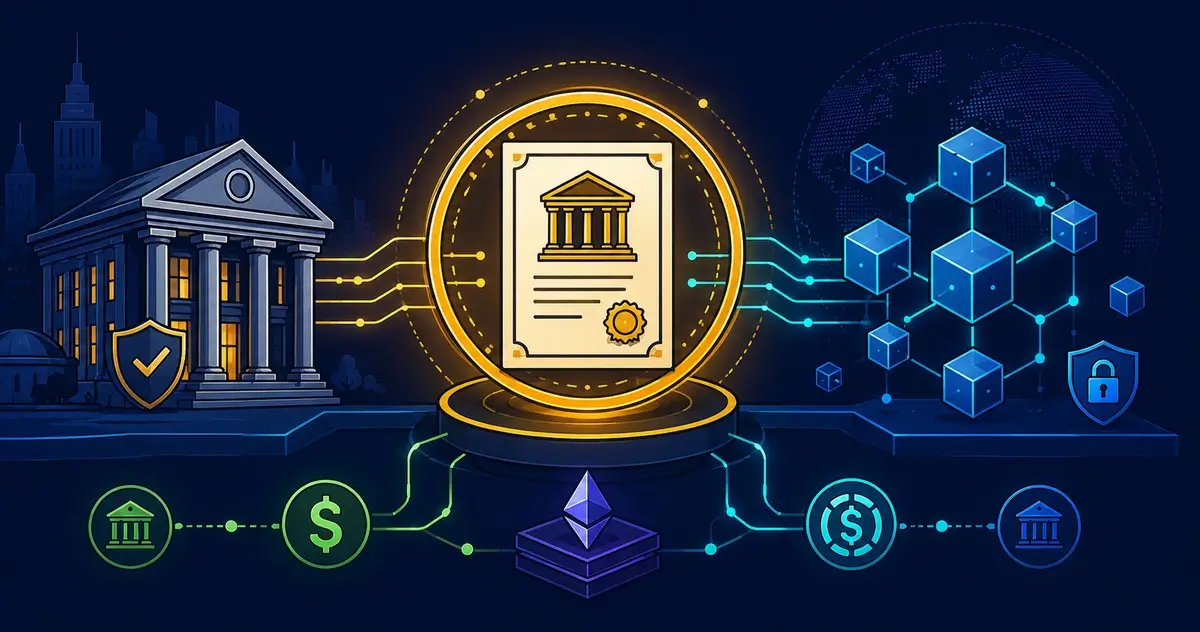
Tokenized Treasuries are becoming one of crypto’s most important Wall Street use cases as traditional financial institutions explore blockchain-based settlement, on-chain funds, and real-world asset tokenization. Unlike speculative crypto assets, tokenized Treasuries connect blockchain infrastructure with familiar financial instruments such as government debt and money market products.
The trend matters because it shows how crypto rails may be used for regulated financial infrastructure rather than only trading or speculation. Related coverage includes Why Stablecoins Are Quietly Becoming Crypto’s Biggest Real-World Use Case, Why More Crypto Platforms Are Focusing on Real-World Payments, and Why Regulators Are Paying More Attention to Stablecoins in 2026.
Key Takeaways
- Tokenized Treasuries are becoming a major real-world asset use case
- Wall Street firms are increasingly exploring blockchain-based fund infrastructure
- Tokenized funds connect traditional finance with on-chain settlement rails
- Stablecoins and tokenized Treasuries are becoming closely linked
- Ethereum remains a major network for institutional tokenization experiments
- Regulatory clarity remains one of the biggest long-term questions
- Analysts increasingly view tokenization as one of crypto’s most practical use cases
What Happened
Institutional interest in tokenized Treasuries and tokenized money market funds has accelerated as major financial firms explore how traditional assets can be issued, transferred, or represented on blockchain networks.
This does not mean traditional finance is abandoning existing systems overnight.
Instead, Wall Street appears to be testing where blockchain infrastructure can improve:
- settlement speed
- transfer efficiency
- transparency
- fund operations
- global asset accessibility
What Tokenized Treasuries Represent
| Concept | General Meaning |
|---|---|
| U.S. Treasuries | Government debt instruments represented on-chain |
| Money Market Funds | Fund shares issued or tracked using blockchain rails |
| Settlement | Potentially faster transfer and ownership updates |
| Yield Access | Exposure to Treasury-linked returns through tokenized products |
| Institutional Adoption | Wall Street firms exploring compliant on-chain finance |
In practice, tokenized Treasuries are becoming a bridge between regulated financial products and crypto-native infrastructure.
What Are Tokenized Treasuries?
Tokenized Treasuries are blockchain-based representations of Treasury-linked financial products.
They may represent exposure to:
- U.S. Treasury bills
- Treasury-focused money market funds
- government debt instruments
- short-term yield products
The important point is that the asset is traditional, while the infrastructure is blockchain-based.
That combination makes tokenized Treasuries different from most crypto tokens.
Why Wall Street Is Interested
Wall Street interest in tokenization is driven by a simple idea:
Traditional assets may become easier to move, settle, and manage when represented digitally on blockchain rails.
Potential benefits include:
- faster settlement
- automated ownership records
- improved transferability
- programmable financial infrastructure
- better integration with digital payment systems
👉 In practice, tokenized Treasuries give institutions a lower-volatility way to experiment with blockchain infrastructure.
Tokenized Treasuries vs Crypto Tokens
| Feature | Tokenized Treasuries | Crypto Tokens |
|---|---|---|
| Asset Type | Traditional financial asset | Native crypto asset |
| Primary Appeal | Yield and stability | Speculation and network value |
| Institutional Fit | High | Varies by asset |
| Regulatory Treatment | Closer to traditional securities | Depends on token type |
| Main Use Case | On-chain financial infrastructure | Trading, payments, and networks |
This is why many analysts see tokenized Treasuries as more institution-friendly than purely speculative crypto assets.
Why This Matters for Crypto
Tokenized Treasuries show that blockchain adoption is not only about coin prices.
The larger story is financial infrastructure.
Tokenization could influence:
- asset settlement
- collateral management
- stablecoin reserves
- institutional trading
- on-chain liquidity
- fund administration
Related articles:
- Why More Crypto Companies Are Building Around Stablecoins
- Bitcoin vs Stablecoins for Everyday Payments
- Why More Crypto Users Are Choosing USDT Over Bitcoin
How Stablecoins and Tokenized Treasuries Connect
Stablecoins and tokenized Treasuries are increasingly discussed together because both sit close to the intersection of crypto and traditional finance.
Stablecoins are often used for:
- payments
- settlement
- trading liquidity
- dollar-based transfers
Tokenized Treasuries may support:
- yield-bearing collateral
- reserve-linked products
- institutional cash management
- on-chain financial markets
👉 If stablecoins become digital cash, tokenized Treasuries may become one of the first major forms of digital collateral.
Why Ethereum Still Matters
Ethereum remains important in tokenization because it has:
- large developer activity
- mature smart contract infrastructure
- institutional familiarity
- existing token standards
- broad wallet and custody support
However, Ethereum is not the only possible network for tokenized assets.
Other blockchain ecosystems may compete on:
- lower fees
- faster settlement
- private infrastructure
- institutional permissioning
- compliance controls
Related articles:
Who Is Interested in Tokenized Treasuries?
| Sector | Why It Matters |
|---|---|
| Asset Managers | Tokenized funds and Treasury-linked products |
| Banks | Settlement, custody, and institutional infrastructure |
| Stablecoin Firms | Reserve management and payment rails |
| Blockchain Networks | Infrastructure for tokenized assets |
| Fintech Platforms | On-chain access to traditional financial products |
Key Risks Analysts Are Watching
Tokenized Treasuries are promising, but they are not risk-free.
The biggest questions involve:
- regulation
- custody
- liquidity
- investor protections
- smart contract security
- settlement rules
Main Risks Around Tokenized Treasuries
| Risk | Why It Matters |
|---|---|
| Regulation | Tokenized securities still require compliance clarity |
| Custody | Institutional custody standards remain important |
| Liquidity | On-chain assets need reliable secondary markets |
| Smart Contracts | Technical risk can affect tokenized products |
| Investor Access | Many products may remain limited to qualified participants |
Because tokenized Treasuries are closer to traditional securities than many crypto assets, compliance will likely remain central to adoption.
Why This Could Be Bigger Than Speculation
Crypto markets are often associated with volatility, trading, and speculation.
Tokenized Treasuries point in a different direction.
They suggest blockchain infrastructure may be useful for:
- traditional asset management
- regulated financial products
- institutional settlement
- digital collateral systems
- 24/7 financial infrastructure
That makes the tokenized Treasury trend important even for people who do not actively trade crypto.
What Analysts Are Watching Next
Market participants are watching several key developments:
- new tokenized fund launches
- institutional custody partnerships
- stablecoin regulation
- Ethereum-based fund infrastructure
- secondary market liquidity
- regulatory treatment of tokenized securities
Related coverage:
- AI Is Reshaping Crypto Companies
- Crypto Security Threats Are Evolving
- Why Bitcoin Dominance Still Matters
Important Context
Tokenized Treasuries do not replace Bitcoin, Ethereum, or stablecoins.
Instead, they add another layer to the crypto market:
- Bitcoin remains the strongest crypto store-of-value narrative
- Stablecoins remain central to digital payments and liquidity
- Ethereum remains important for smart contracts and tokenized assets
- Tokenized Treasuries connect traditional finance to on-chain infrastructure
This makes tokenization one of the clearest examples of crypto becoming financial infrastructure rather than only a speculative market.
Final Thoughts
Tokenized Treasuries are becoming one of crypto’s most important Wall Street bridges because they combine familiar financial assets with blockchain-based infrastructure.
The trend is not just about putting assets on-chain.
It is about whether traditional finance can use crypto rails for faster settlement, better transparency, and more programmable financial markets.
In practice, tokenized Treasuries may become one of the clearest real-world use cases for blockchain adoption in institutional finance.
FAQ
What are tokenized Treasuries?
Tokenized Treasuries are blockchain-based representations of Treasury-linked financial products such as government debt or Treasury-focused funds.
Why are tokenized Treasuries important?
They connect traditional financial assets with blockchain infrastructure.
Are tokenized Treasuries the same as stablecoins?
No. Stablecoins usually represent digital cash, while tokenized Treasuries represent Treasury-linked assets or funds.
Why is Wall Street interested in tokenization?
Because blockchain infrastructure may improve settlement, transparency, and asset transfer efficiency.
Does Ethereum matter for tokenized Treasuries?
Yes. Ethereum remains one of the most important smart contract networks for tokenization experiments.
Are tokenized Treasuries risk-free?
No. Regulation, custody, liquidity, and smart contract risks still matter.
Could tokenized Treasuries become a major crypto use case?
Yes. Many analysts view tokenized Treasuries as one of the clearest bridges between crypto and traditional finance.

SEC Rewrite Could Bring Stock Ownership Onchain
The SEC is modernizing transfer-agent rules for blockchain securities, tackling the legal ownership records that tokenized-stock trading cannot solve alone.
Banks Are Realizing Tokenized Deposits May Not Be Enough
Banks are moving deposits onto programmable rails, but interoperability and portability may leave room for stablecoins alongside tokenized bank money.
Tokenized Deposits Are Banks’ Answer to Stablecoins
HSBC and Standard Chartered completed a live tokenized deposit transaction through Swift, showing how banks may bring programmable money onchain without issuing stablecoins.